
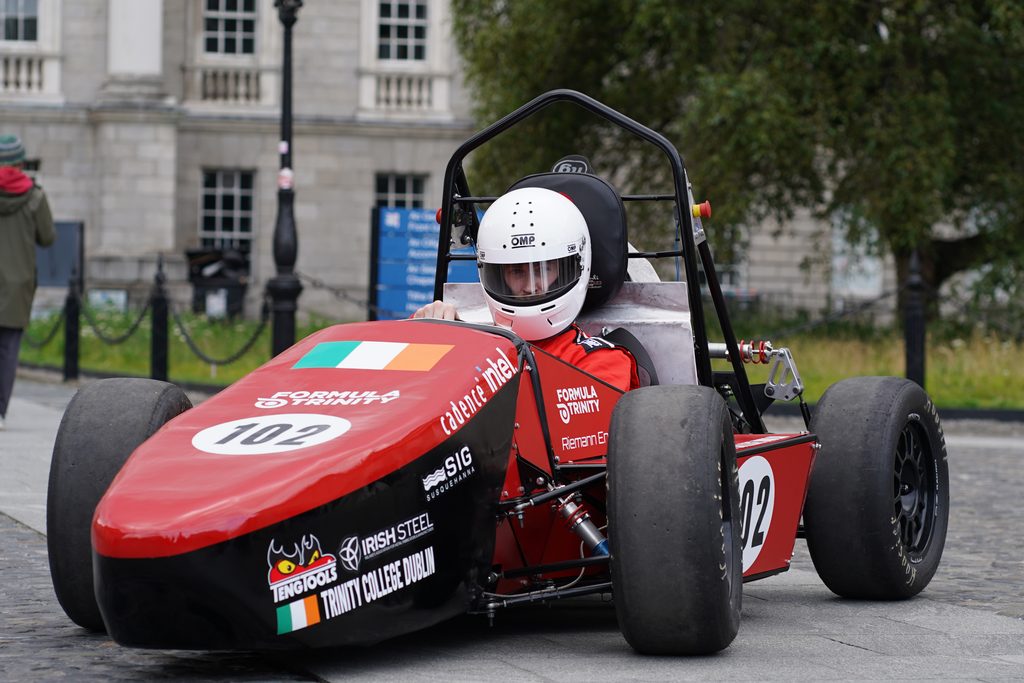
“Our goal is to take a previously built internal combustion race car and adapt it so that it can be driven by YOU, or can drive itself”
“Here at Formula Trinity Autonomous, we’re not just spectators of the AI revolution; we’re the ones driving it.”
Welcome to Formula Trinity Autonomous, the driving force behind a thrilling fusion of cutting-edge technology and the exhilarating world of autonomous racing. Our team is more than just a group of students; we’re a dynamic community of forward-thinkers, innovators, and collaborators, united by our shared passion for problem-solving and implementing our self-driving technology.
Get To Know The departments
Automotive
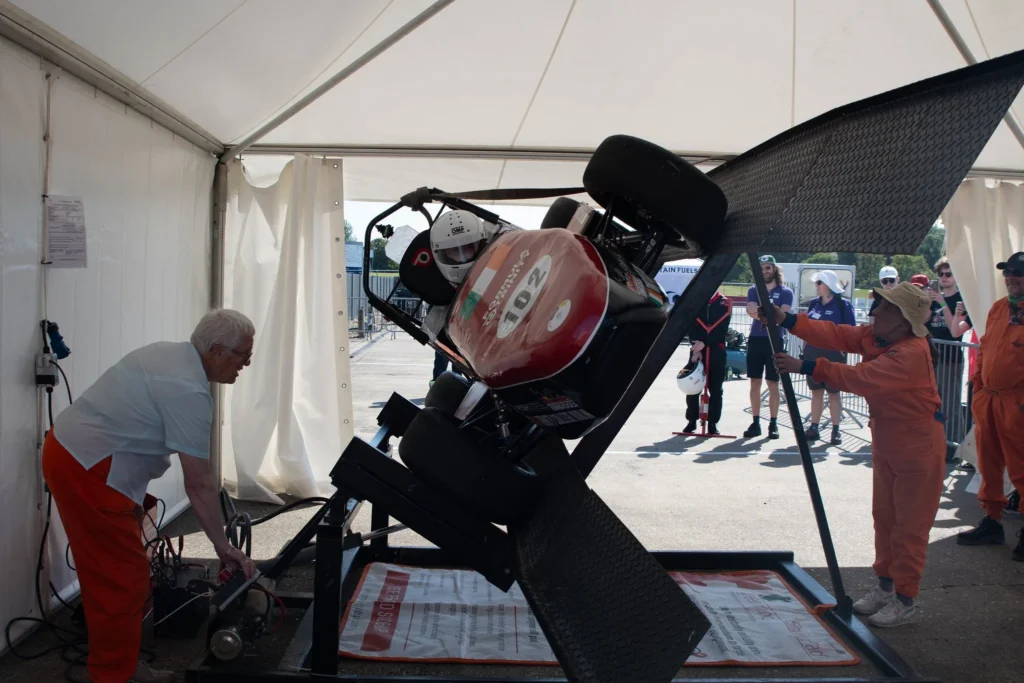
Responsible for everything that relates to the internal combustion elements on the car which include, Chassis, Suspension, Power train, Drive train, IC electronics and Aerodynamics. We are adapting a previously team built IC car. Main areas for work this year will be chassis modifications, rewire and engine work along with collaborating with other departments to accommodate the addition of new hardware to make self driving possible. Plenty of hands on work along with documentation, CAD and electrical schematic design
Mechatronics
Is responsible for converting movement from motors or actuators into changes in steering angle, compressing break calipers, opening the throttle and changing gears with the shifter and clutch. This department will have a lot of mechanical design through CAD and FEA, manufacturing, documentation and testing.
Electronics
Will be responsible for providing power to all autonomous hardware on the car. Sensors, motors, computing modules and displays as well as linking in with the IC electronics of the car and data paths through the car. KiCAD is used to design our electrical schematics. There will be plenty of hands on electrical work for wiring looms around the car along with packaging of hardware. Some circuits will involve PCB design. Documentation throughout.
Integration
Responsible for determining what needs to be sensed and measured on the car, selecting suitable sensors, deciding where and how they should be mounted, and ensuring their data reaches the appropriate computing systems. The department also works on safety devices and system integration. Work includes KiCAD electrical schematics, hands-on electrical work, CAD, FEA, manufacturing and documentation.
Interface
Acts as the bridge between the autonomous software and the vehicle hardware. The department takes decisions made by the software and converts them into commands for the car’s actuators and control systems, while also monitoring system health and ensuring the vehicle operates safely and reliably.